Annapurna · Trek
Mardi Himal Ridge
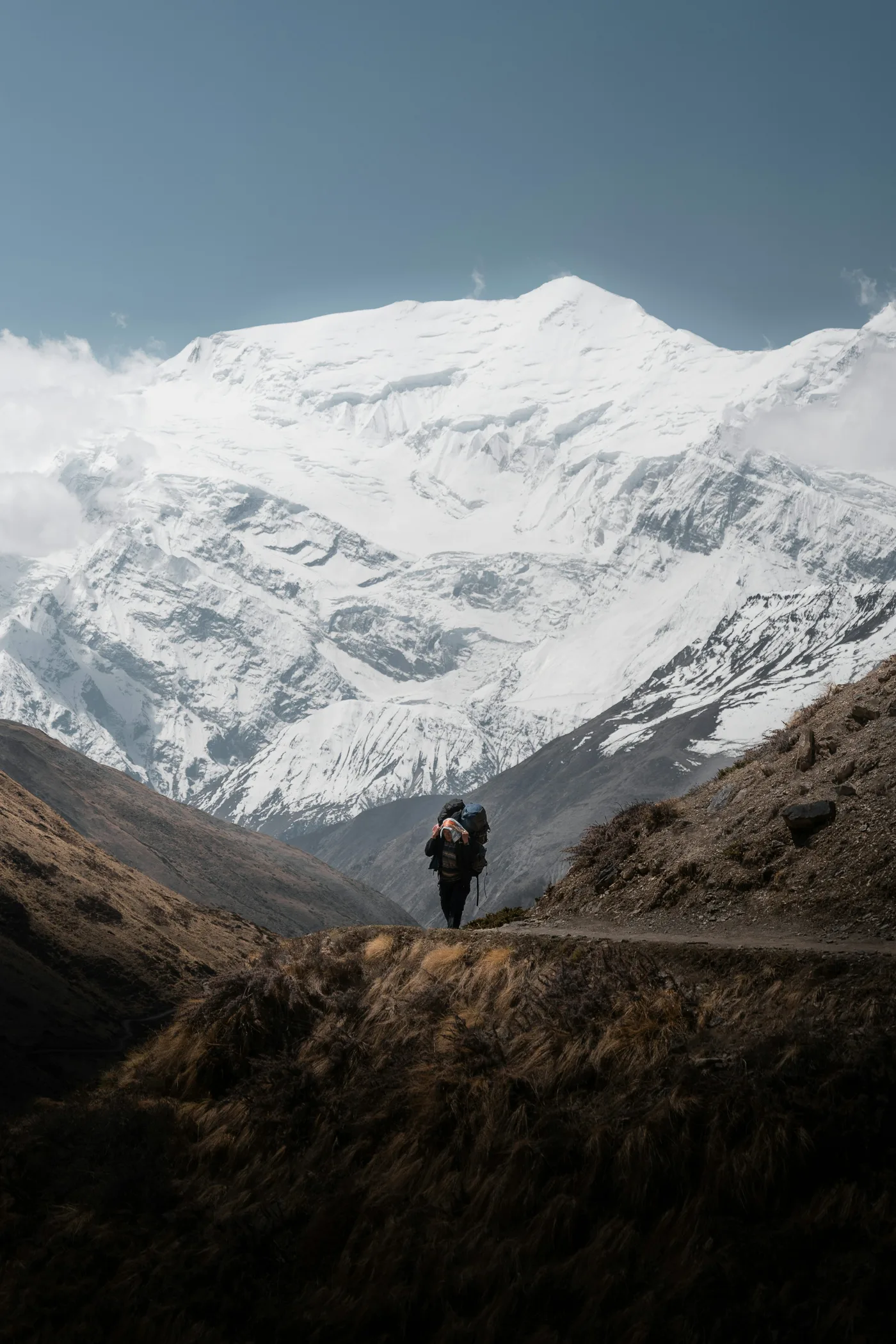
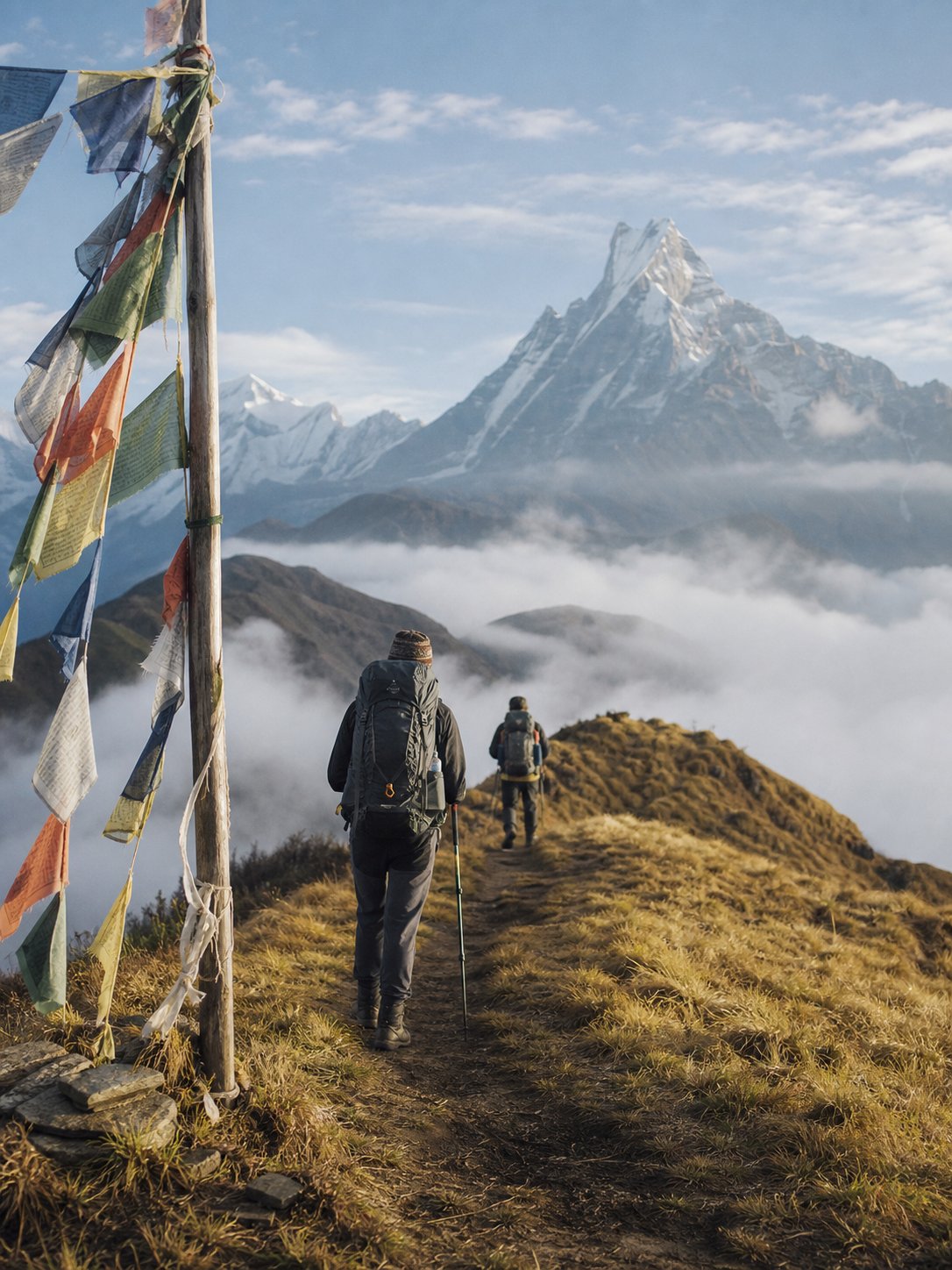
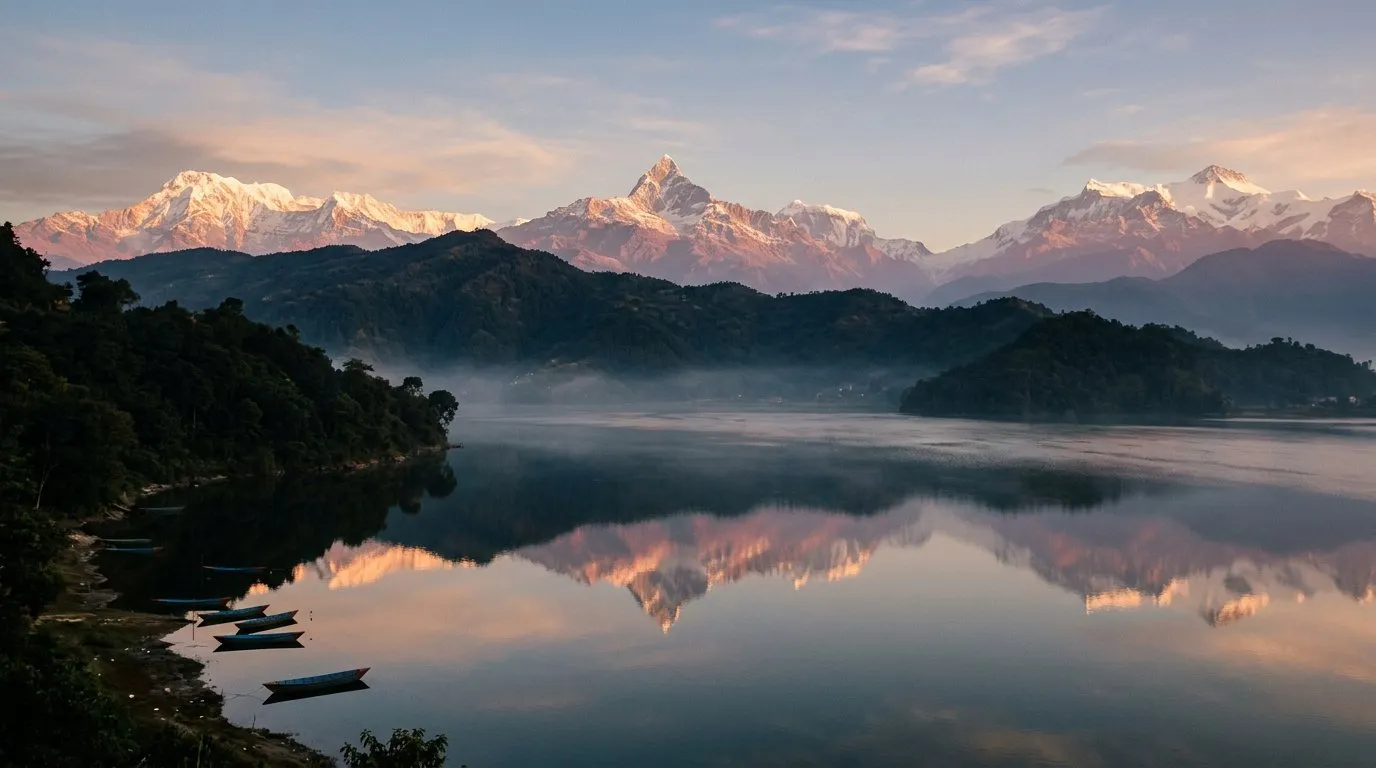
A short, spectacular ridge walk above the clouds, face to face with Machhapuchhre’s fluted summit. Over 8 days you will walk between spring, autumn, winter skies with two local leaders, a group of never more than eight, and every permit, lodge and altitude check already handled. This is the complete, honest guide to the route — what each day asks of you, what it gives back, and exactly what you are paying for.
01 Why this trek
Trip highlights
- A sea of clouds holding its breath below the ridge — the single image everyone carries home
- 8 days on the trail, topping out at 4,500 m
- Graded moderate, with acclimatisation days built into the route
- Two Hike Globally leaders and a maximum of eight travellers per departure
- Hand-picked family-run lodges, chosen on foot and revisited every season
- Every permit, park fee and internal transfer handled before you arrive
- Best walked in autumn — departures from Mar · Apr · Nov
- Daily oximeter checks, supplementary oxygen and a satellite communicator carried
02 The route, honestly
Trek overview
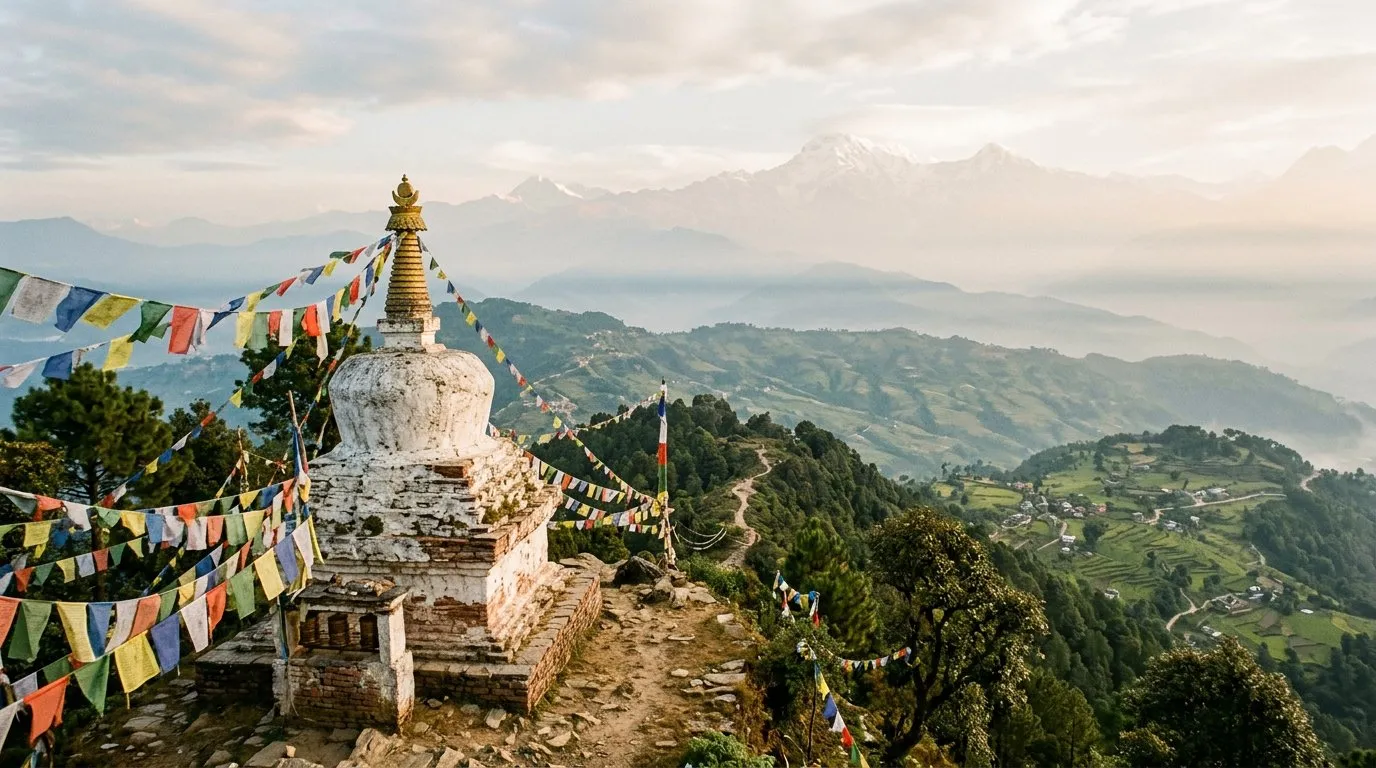
Mardi Himal Ridge is a short, spectacular ridge walk above the clouds, face to face with Machhapuchhre’s fluted summit — and it remains one of the Annapurna region's most complete walking journeys. Over 8 days the route climbs from valley farmland to 4,500 m, crossing four distinct ecological bands in the space of a week: terraced rice, rhododendron and oak forest, juniper and yak pasture, and finally the bare moraine and ice of the high Himalaya.
We grade it moderate. In practice that means five to seven hours of walking on most days, on stone paths and glacial moraine rather than technical ground, with two dedicated acclimatisation days written into the schedule. No ropes, no crampons, no prior mountaineering — but real, sustained days at altitude that reward anyone who trains for them.
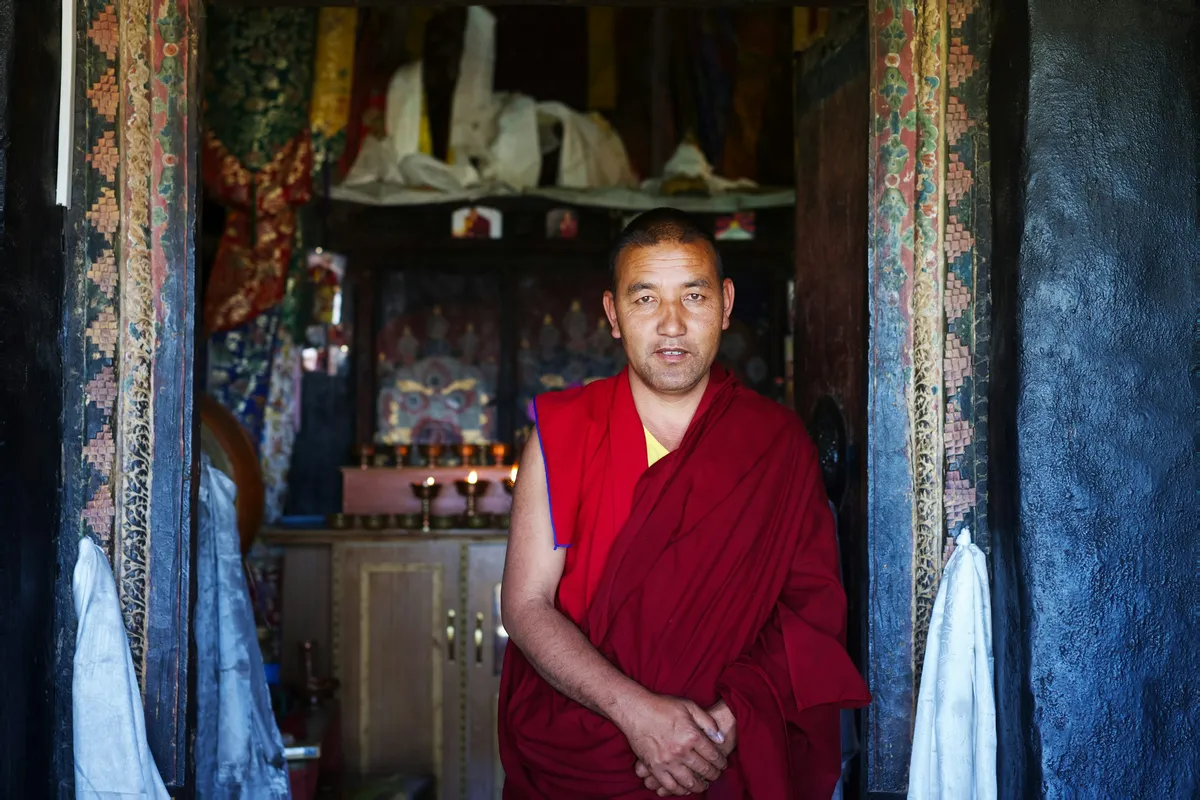
What separates this departure from the same line drawn on any other map is who walks it with you. Our leaders are from these valleys. They know which lodge has the warm room, which pass holds ice into May, and which family serves the best dal bhat between the trailhead and the top. They are paid year-round, insured, and have walked this route dozens of times in every kind of weather.
The autumn window is the prime season, with stable mornings, long visibility and cold, clear nights. Shoulder departures are quieter and often more beautiful, at the cost of shorter weather windows. Whichever dates you choose, the group stays small, the pace stays yours, and the mountain sets the timetable.
“A sea of clouds holding its breath below the ridge” — the moment the whole itinerary is built around.
03 At a glance
Day-to-day itinerary
The shape of the journey in one screen. Full detail — altitudes, lodges, walking hours and photographs — is in section 05.
- Day 01Arrive in Kathmandu
- Day 02Transfer to the Annapurna trailhead
- Day 03The climb into the high country
- Day 04Acclimatisation day
- Day 05A sea of clouds holding its breath below the ridge
- Day 07Descend and return to Kathmandu
04 Departure dates
Book your departure
Pick a date, tell us who is coming, and we will hold your place for 48 hours. No payment is taken on this page.
November 2026
3 departures this month
- Places open
- Few places left
- Sold out
Prices are per person, twin-share, and include everything listed under “What’s included”. Private departures run on any date you like — choose the closest one and tell us in the follow-up email.
05 Every single day
Full itinerary details
Open any day for its altitude, walking hours, lodge, meals, the story of the stage and photographs from the trail.
- Altitude
- 1,400 m / 4,593 ft
- Trek duration
- No walking — transfer only
- Accommodation
- Boutique heritage hotel, Kathmandu
- Meals
- Welcome dinner
Your guide meets you in the arrivals hall at Tribhuvan International and drives you through the late-afternoon traffic to a quiet courtyard hotel a few streets back from the noise of Thamel. There is nothing to do today but sleep off the flight.
In the evening we run the trip briefing over dinner: the route, the weather picture for your dates, the altitude plan, and a gear check that quietly sorts out anything missing. Whatever you are short of, it can be bought or hired within a ten-minute walk.
- Altitude
- 2,600 m / 8,530 ft
- Trek duration
- 3–4 hours walking
- Accommodation
- Family-run mountain lodge
- Meals
- Breakfast, lunch, dinner
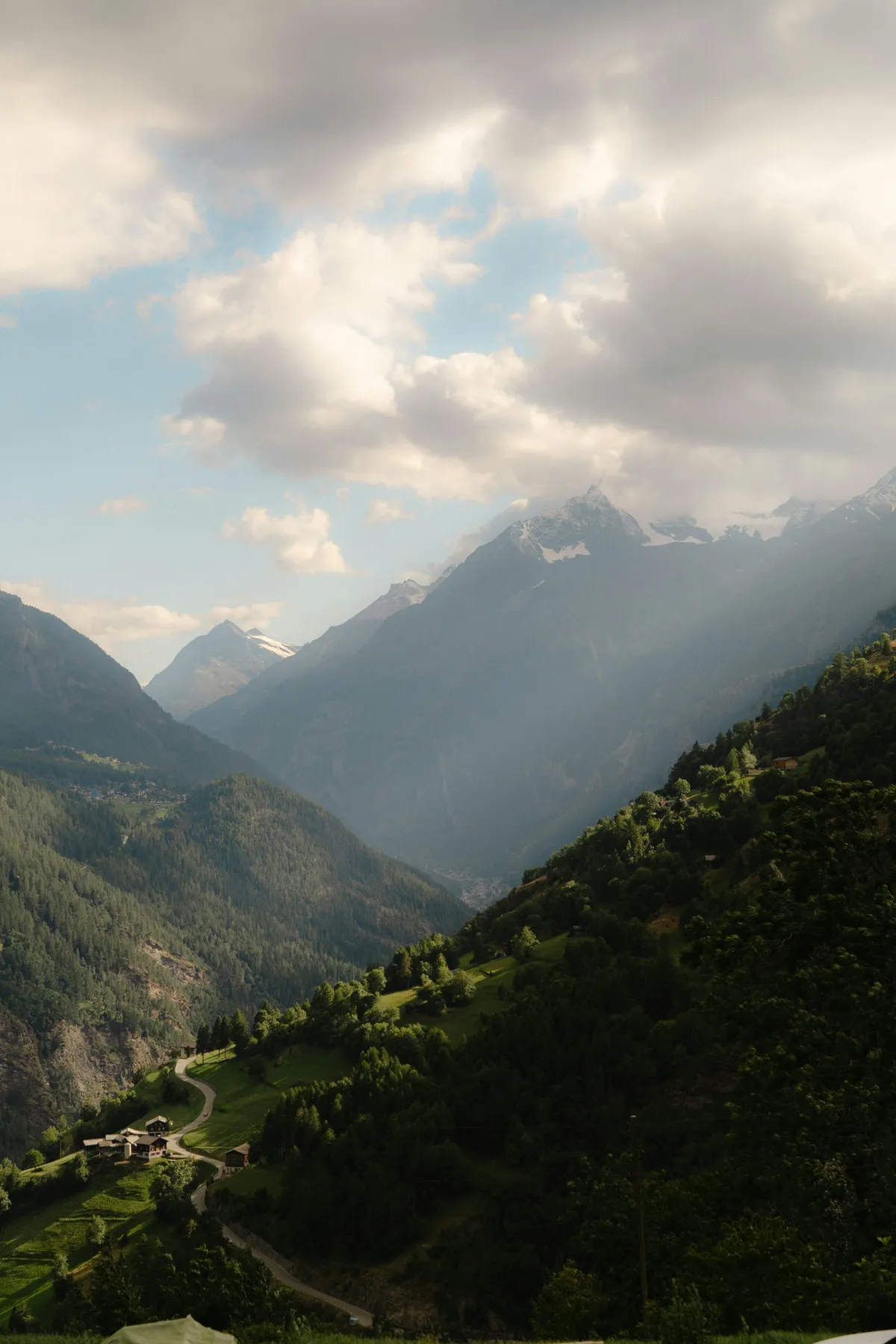
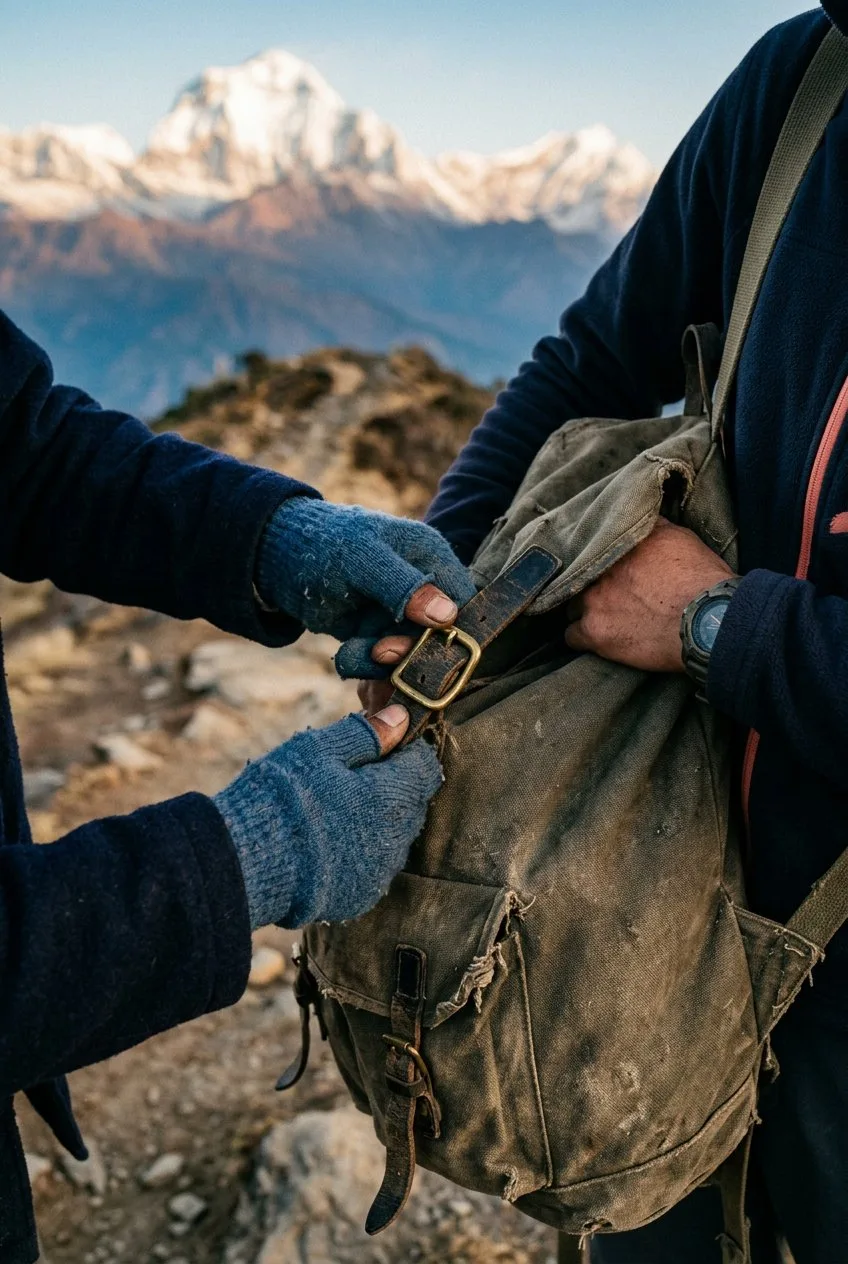
An early start gets us out of the valley and into the Annapurna approach before the cloud builds. The first walking day is deliberately short — a stone path through terraced fields and pine, a suspension bridge or two, and a river running loud below you.
You arrive at the lodge with daylight to spare. Tea on the terrace, an hour to sort your duffel, and the first of many plates of dal bhat.
- Altitude
- 3,450 m / 11,318 ft
- Trek duration
- 5–6 hours walking
- Accommodation
- Family-run mountain lodge
- Meals
- Breakfast, lunch, dinner
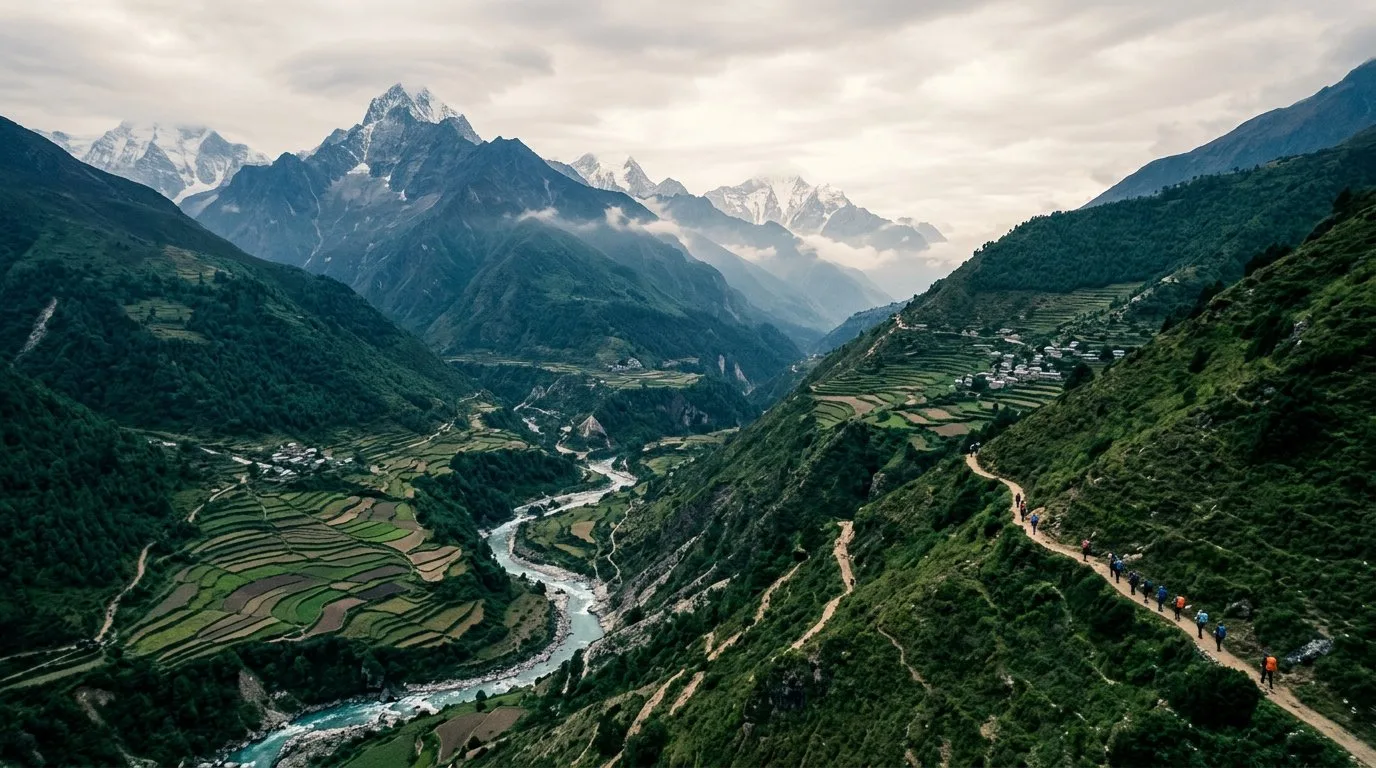
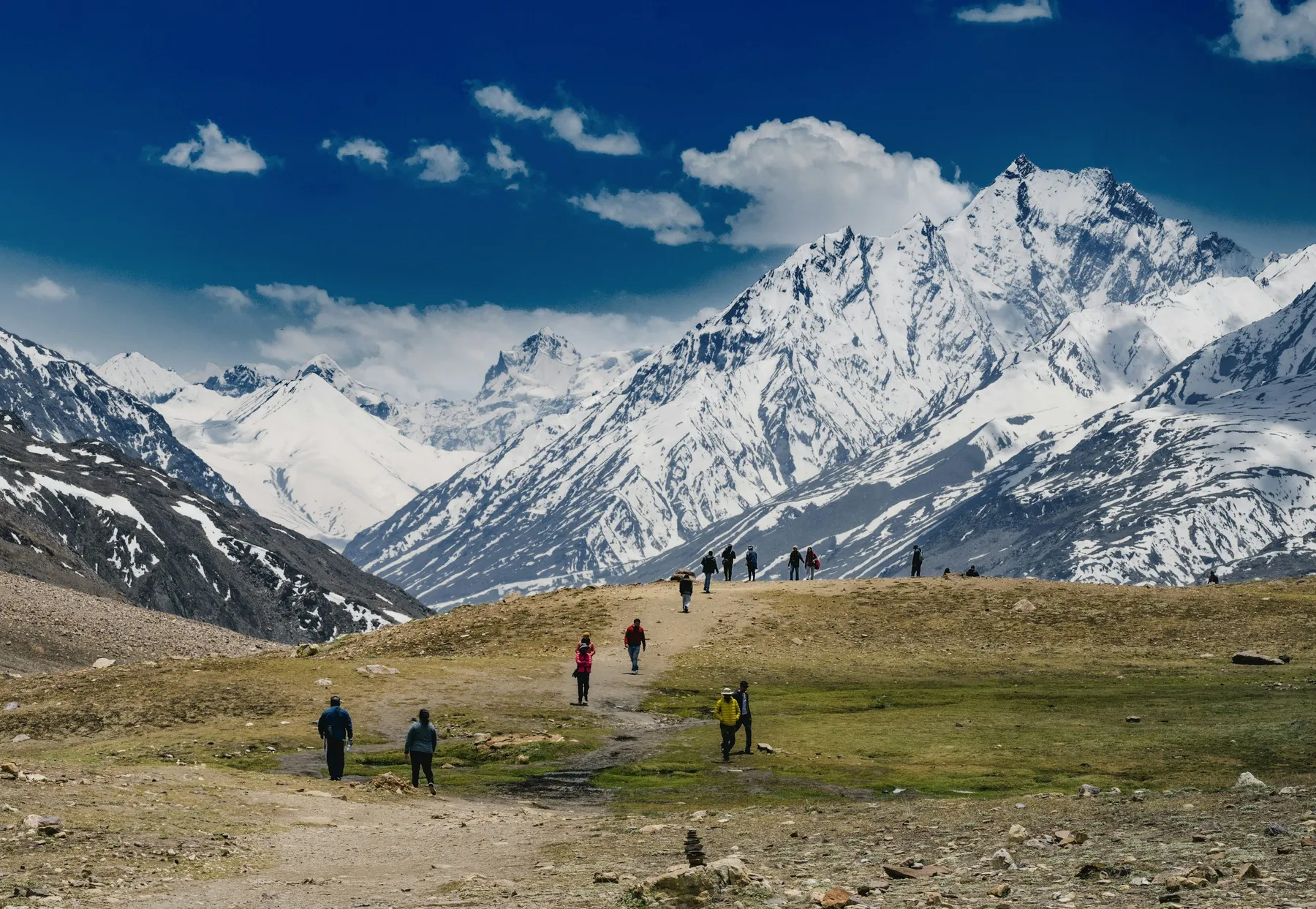
Today the trail earns its altitude. A long, steady staircase of stone and root lifts you out of the forest belt, and the vegetation thins with every switchback until you are walking in juniper and open rock.
The reward is the first full horizon of the Annapurna range — peaks that were rumours this morning are now a wall across the north. Your leaders will stop you often, not because the pace is hard, but because arriving slowly is how you arrive at all.
- Altitude
- 3,900 m / 12,795 ft
- Trek duration
- 3 hours, climb high and sleep low
- Accommodation
- Family-run mountain lodge
- Meals
- Breakfast, lunch, dinner
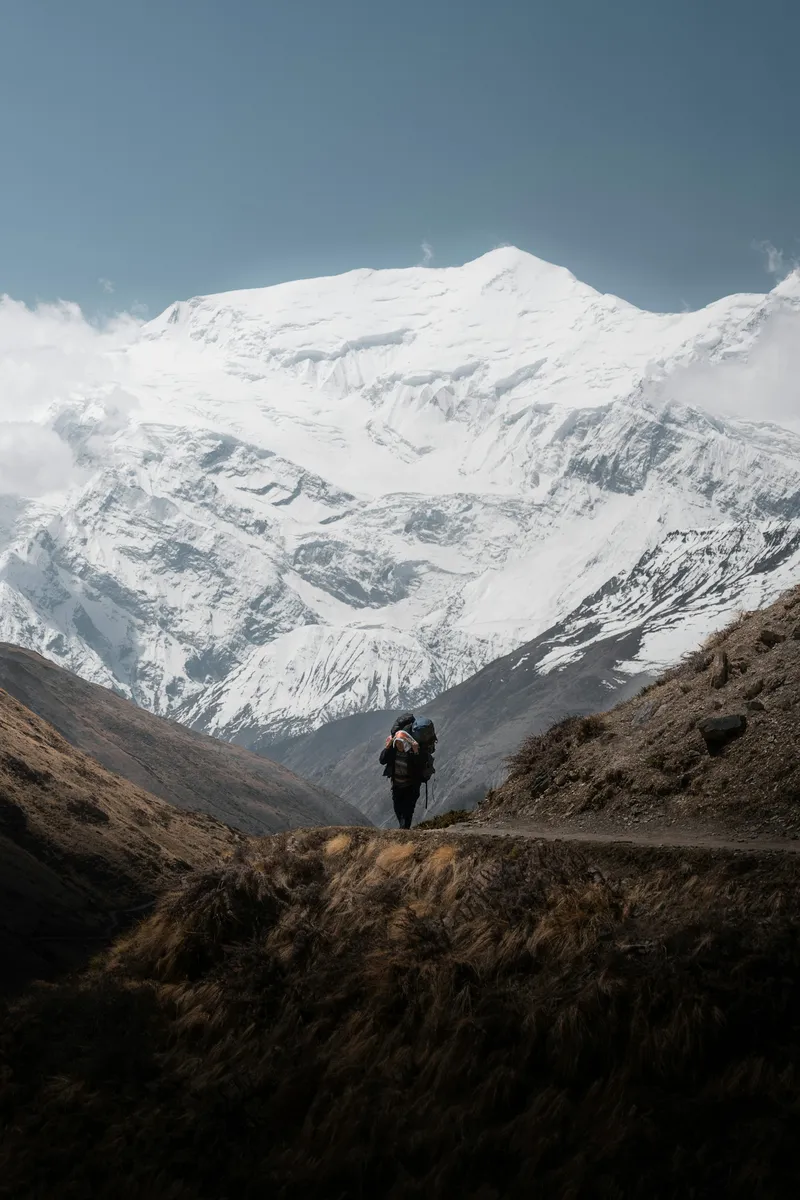
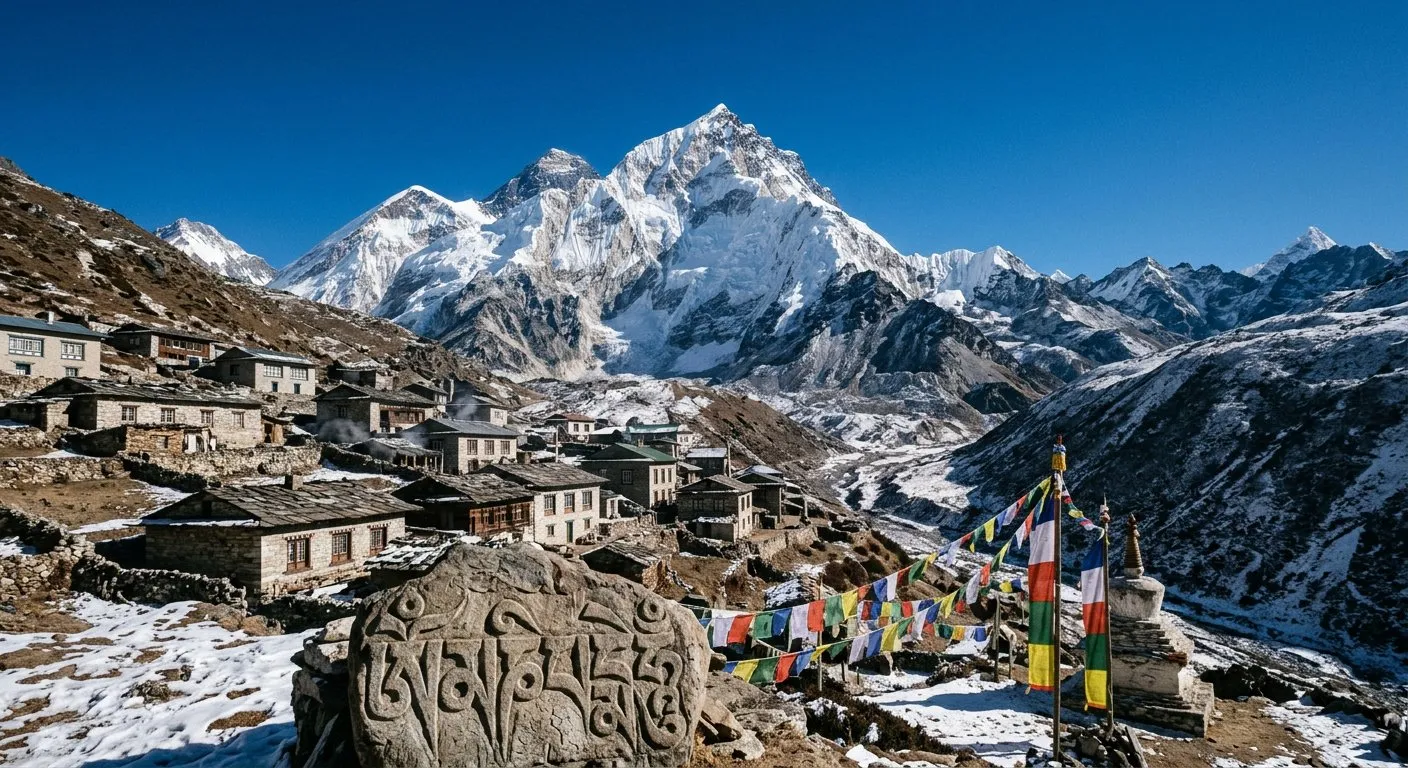
A rest day that is not a day off. We climb 400 metres above the village after breakfast, spend an hour on a ridge with the whole valley underneath, and walk back down to sleep at the altitude we slept at last night. It is the single most effective thing we do for your summit day.
The afternoon is yours: a bakery, a monastery courtyard, a hot shower, or a long, uninterrupted nap. Your guide takes oximeter readings before dinner and talks each one through with you.
- Altitude
- 4,500 m
- Trek duration
- 6–8 hours, the big day
- Accommodation
- High mountain lodge
- Meals
- Breakfast, packed lunch, dinner
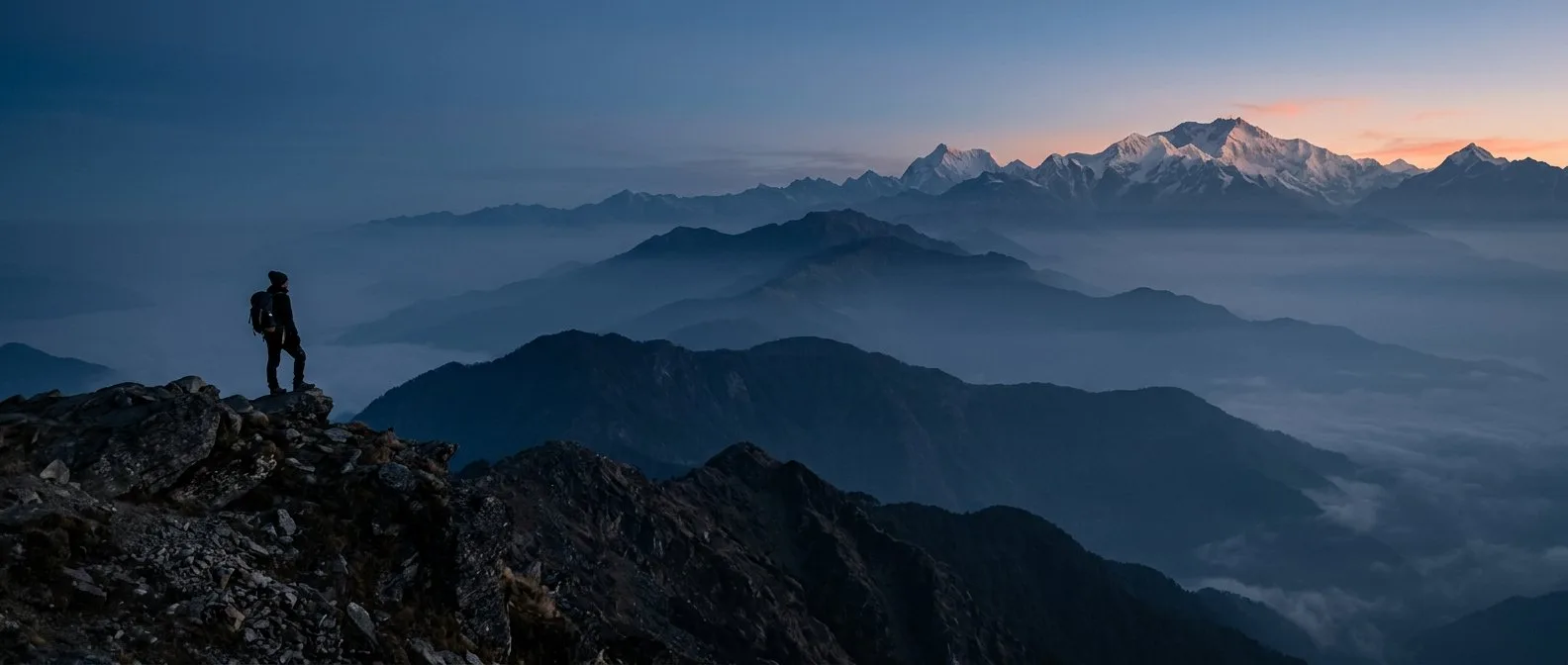
This is the day the trip is built around. A sea of clouds holding its breath below the ridge — and everything before it has been preparation for standing here with enough breath left to take it in.
We start in the dark to be in position for first light, walk slowly and deliberately, and keep the group together. Expect it to be cold, bright and completely silent except for your own breathing and the wind moving over the ridge.
- Altitude
- 1,400 m / 4,593 ft
- Trek duration
- 4–5 hours, then transfer
- Accommodation
- Boutique heritage hotel, Kathmandu
- Meals
- Breakfast, farewell dinner
Going down is faster and stranger than you expect. Colour comes back into the landscape, the air thickens, and by mid-morning you are walking in a t-shirt through villages that felt impossibly high a week ago.
Back in Kathmandu there is a hot shower, a change of clothes, and a farewell dinner with your leaders and the crew who carried the trip. Certificates, photographs, and the beginning of the conversation about where you go next.
06 The full picture
What’s included & excluded
No asterisks and no on-trail surprises. If it is in the left column, it is paid for.
What’s included
- Airport pick-up and drop-off in Kathmandu by private vehicle
- All national park fees, TIMS cards and restricted-area permits
- Two Hike Globally leaders — never more than four travellers per guide
- Government-licensed porters (one for every two travellers, insured and fairly paid)
- All lodge accommodation on the trail, twin-share, in hand-picked family-run houses
- Three meals a day on trek — breakfast, lunch, dinner and unlimited tea
- Domestic flights and ground transport inside Nepal as per the itinerary
- Daily pulse-oximeter altitude checks and a guide-carried medical kit
- Supplementary oxygen and a satellite communicator on every departure
- Duffel bag, trekking poles and a down jacket on loan for the trek
- Farewell dinner in Kathmandu with your crew
- A measured carbon offset for your international and domestic flights
What’s excluded
- International flights to and from Kathmandu
- Nepal entry visa (USD 50 for 30 days, issued on arrival)
- Travel and medical insurance — mandatory, and must cover helicopter evacuation
- Accommodation in Kathmandu beyond the nights listed in the itinerary
- Lunches and dinners in Kathmandu, other than the farewell dinner
- Hot showers, battery charging and Wi-Fi in trail lodges (USD 2–6 each)
- Bottled or boiled drinking water on the trail
- Alcoholic and bottled drinks, snacks and personal shopping
- Personal trekking gear and clothing not listed as loan equipment
- Emergency evacuation, rescue and any costs arising from early descent
- Tips for your guides and porters (we suggest 8–10% of the trip price)
- Anything not explicitly listed in the “What’s included” column
07 Before you fly
Essential information
Fitness and preparation
A moderate grade means consecutive days of five to seven hours on foot, carrying only a daypack of five to seven kilograms. Start preparing twelve weeks out: two hill walks a week building to four hours with a loaded pack, plus two cardio sessions and one strength session focused on legs, core and ankles.
If you can walk for six hours in the hills, sleep, and do it again the next morning without dread, you are ready for this route. Age is a poor predictor — our oldest traveller on this trip was 74, and finished it strongly.
Altitude and health
The route tops out at 4,500 m. Mild headaches, broken sleep and a reduced appetite are normal at these heights; persistent vomiting, breathlessness at rest, or loss of coordination are not, and mean immediate descent. Your leaders take oximeter readings twice daily and log them.
Talk to your doctor about acetazolamide before you travel, bring any personal medication in your hand luggage, and tell us about every condition on your booking form — asthma, diabetes, heart conditions and recent surgery are all manageable with notice, and dangerous without it.
Visas, permits and insurance
Most nationalities receive a Nepal visa on arrival at Kathmandu: USD 50 for 30 days, payable in cash, with a passport valid for six months and one photograph. We arrange every trekking permit, national park fee and restricted-area document for you.
Travel insurance covering trekking to at least 6,000 m and helicopter evacuation is mandatory — no exceptions, and we check the certificate before you fly. We will send a list of insurers our travellers rate highly when you book.
Money, connectivity and tipping
Carry USD 250–400 in small notes for tips, hot showers, charging, snacks and drinks on the trail. ATMs stop at the last road-head town, so draw cash in Kathmandu. Cards are useless above the trailhead.
A local SIM covers much of the lower route; above that, lodges sell Wi-Fi vouchers of variable quality and your guide carries a satellite communicator for anything urgent. We suggest tipping 8–10% of the trip price, pooled and shared with the whole crew at the farewell dinner.
Responsible travel on this route
We cap group size at eight, carry out every piece of non-biodegradable waste, use refill stations instead of bottled water, and keep porter loads within the 20 kg limit set by the International Porter Protection Group. Our crews are insured for altitude, equipped with the same jackets and boots we lend you, and paid above the regional standard.
Roughly 2% of every booking funds the schools and health posts in the valleys this trail passes through, and each flight on your itinerary is carbon-offset through a verified Nepali cookstove programme.
08 The line on the ground
Route map
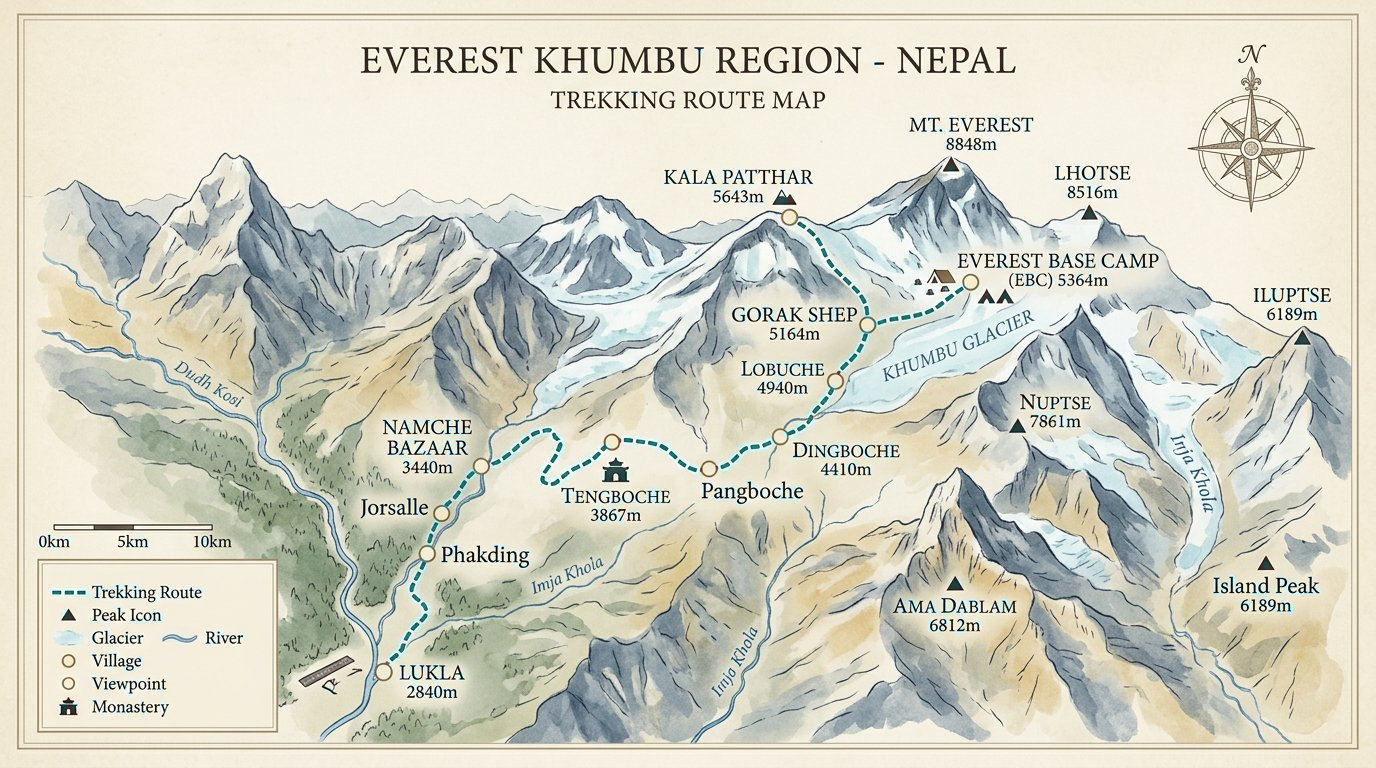
Mardi Himal Ridge — full route, overnight villages and altitude profile.
- Trekking route
- Dashed teal line, walked daily
- Overnight stops
- Circled villages, all lodge-based
- High point
- 4,500 m
- Total distance
- 76 km on foot
09 Pack once, pack right
Packing list
Your duffel is carried by a porter and capped at 15 kg; your daypack is yours to carry all day. Down jacket, four-season sleeping bag and poles are loaned free of charge.
Layering system
Three layers, worn in rotation
- Two merino or synthetic base layers (long sleeve)
- Lightweight fleece or grid-fleece mid layer
- 600–800 fill down jacket (loaned free of charge)
- Waterproof, breathable shell jacket and over-trousers
- Two pairs of trekking trousers, one softshell
Footwear & traction
Break everything in before you fly
- Mid-weight waterproof boots with ankle support
- Four pairs of merino trekking socks, one thick pair for lodges
- Camp shoes or down booties for the evenings
- Microspikes for early-spring and late-autumn departures
- Gaiters for the higher, dustier sections
Sleep, sun & safety
The five things people forget
- Sleeping bag rated to −10 °C (hire available in Kathmandu)
- Category 4 glacier sunglasses and a spare pair
- SPF 50 sunscreen and SPF lip balm
- Headtorch with fresh batteries and a power bank (20,000 mAh)
- Personal medication, blister kit and rehydration salts
Documents & small kit
Keep these in your daypack, not your duffel
- Passport with six months validity and four passport photos
- Insurance certificate with helicopter-evacuation cover
- USD in small notes for tips, showers and charging
- 1 L bottle plus a 2 L bladder, and water purification tablets
- Quick-dry towel, wet wipes and a reusable cup
10 Asked and answered
Frequently asked questions
No technical experience is required — this is a walking journey, not a climb. What matters is that you can walk for five to six hours on consecutive days over uneven ground. We recommend three months of preparation: two long hill walks a week with a loaded daypack, plus regular cardio. Your leaders set the pace to the slowest comfortable walker in the group, always.
Every itinerary is built around the “climb high, sleep low” principle, with dedicated acclimatisation days written into the route rather than bolted on. Your guides take pulse-oximeter readings each morning and evening, carry supplementary oxygen and a satellite communicator, and have the authority to change the plan the moment a reading or a symptom says so.
A maximum of eight travellers with two leaders — a guide-to-traveller ratio of one to four. Most departures run with four to six people, typically aged between 28 and 65, from six or seven different countries. Solo travellers make up roughly half of every group, and there is no single supplement on the trail.
Mountain flights are weather-dependent, so we build a contingency day into every Himalayan itinerary. If the window stays shut, we re-route by helicopter or by road at our cost where the itinerary allows. Your leaders make that call with the operations desk in Kathmandu, and you will always be told what is happening and why.
Yes. Any departure on the calendar can be taken privately on your own dates with the same leaders and the same inclusions — private journeys are typically 15–20% more per person for a group of four. Families are very welcome; we adjust daily distances and add rest days for younger walkers.
A 20% deposit confirms your place, and the balance is due 45 days before departure. Cancel more than 60 days out and the deposit converts to a credit valid for two years. Inside 60 days we refund on a sliding scale, and if we cancel a departure for any reason you receive a full refund or a free transfer.
Never drink untreated water. We provide purification tablets and every lodge sells boiled water; the trail also has filtered refill stations at most villages. Food is ordered from the lodge menu and is included — dal bhat, noodles, soups, eggs, porridge and pasta. Vegetarian, vegan, gluten-free and halal diets are all straightforward with notice.
— Your dates, your pace
Ready to walk Mardi Himal Ridge?
New this season. Reserve a date with a 20% deposit, or talk it through with the Kathmandu team first — both start in the same place.